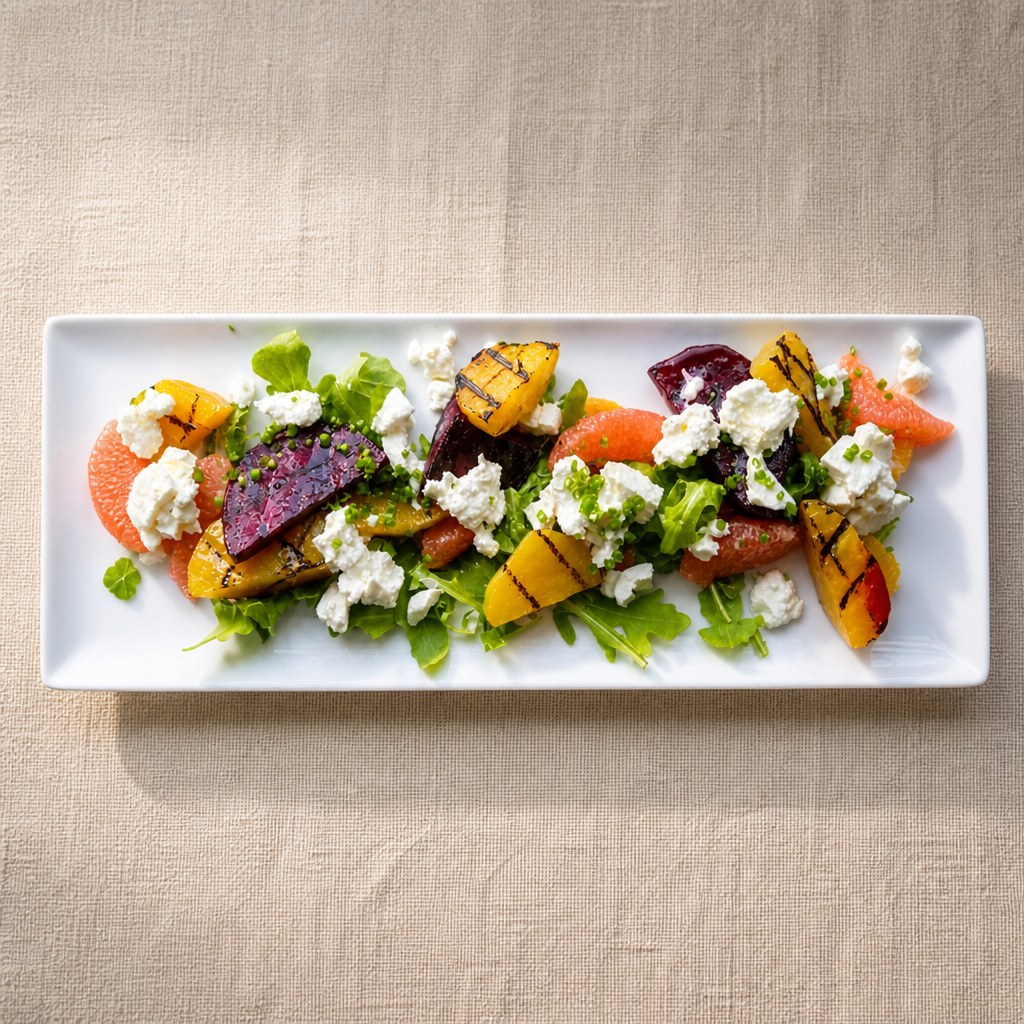
Roasted beets, arugula, citrus, burrata cheese. White Balsamic
Where this dish comes from
Burrata spent its first 80 years as a local secret of the Puglia region around Andria before rapid dissemination in the early 2000s made it globally famous. The cheese was created around 1920 as a way to use fresh mozzarella curd scraps and leftover cream — the cheesemaker filled a fresh mozzarella shell with stracciatella (shredded mozzarella soaked in heavy cream) and sealed it. The result: a cheese with the structural integrity to hold a shape and the creamy, liquid interior that makes it extraordinary when cut open. Today burrata is produced globally, but the best remains the fresh, day-of-make Pugliese original.
Cheffy’s note
Burrata is a trust exercise — you're betting entirely on the quality of the cheese. There is nowhere to hide. Use the freshest burrata you can find (check the make date — it should ideally be within 24–48 hours), serve it at room temperature, and season it generously with good olive oil and flaky salt. The accompaniments should complement, not compete: fresh tomatoes, stone fruit in season, or simply crostini and a balsamic drizzle. Do not bury it in toppings.