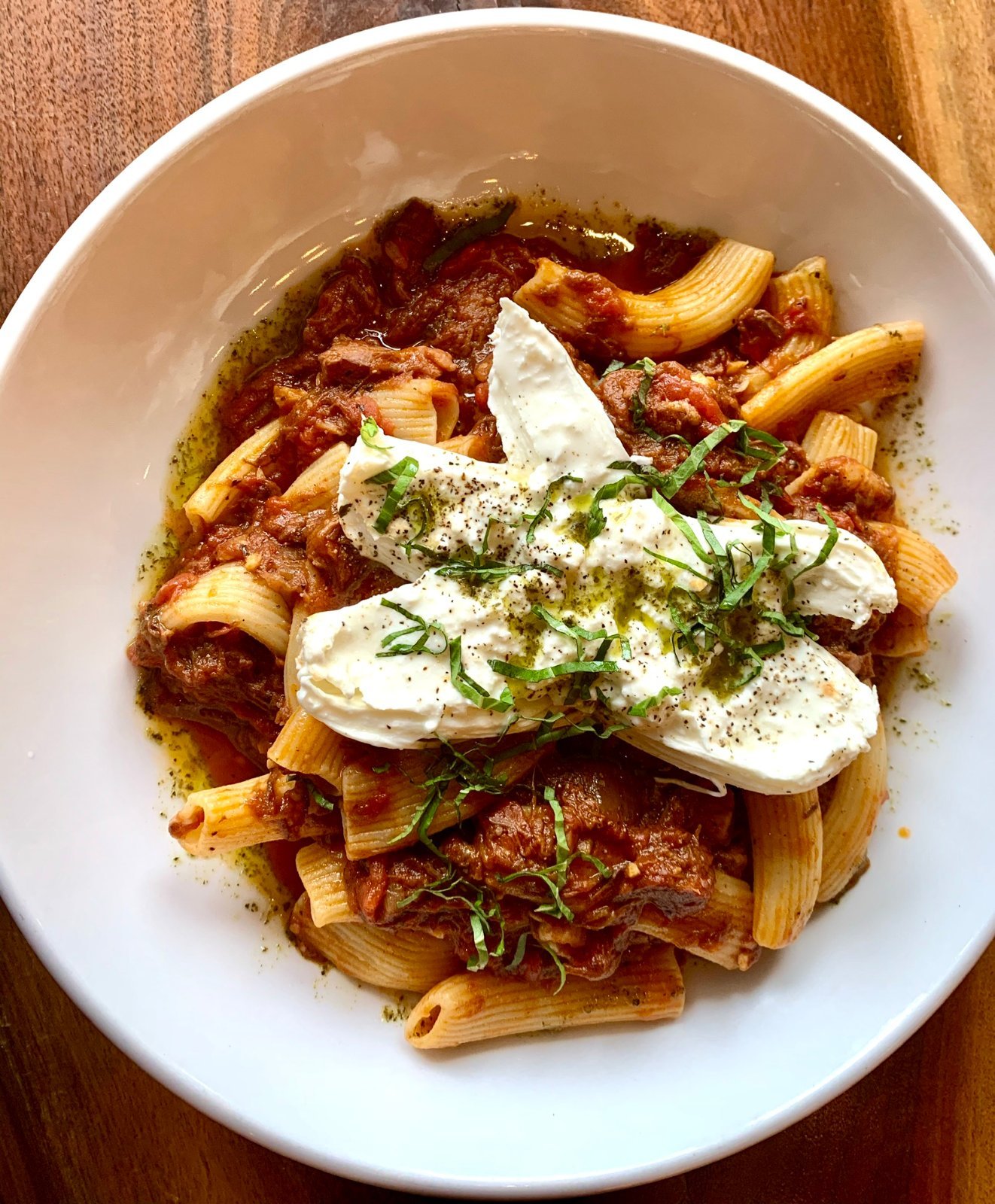
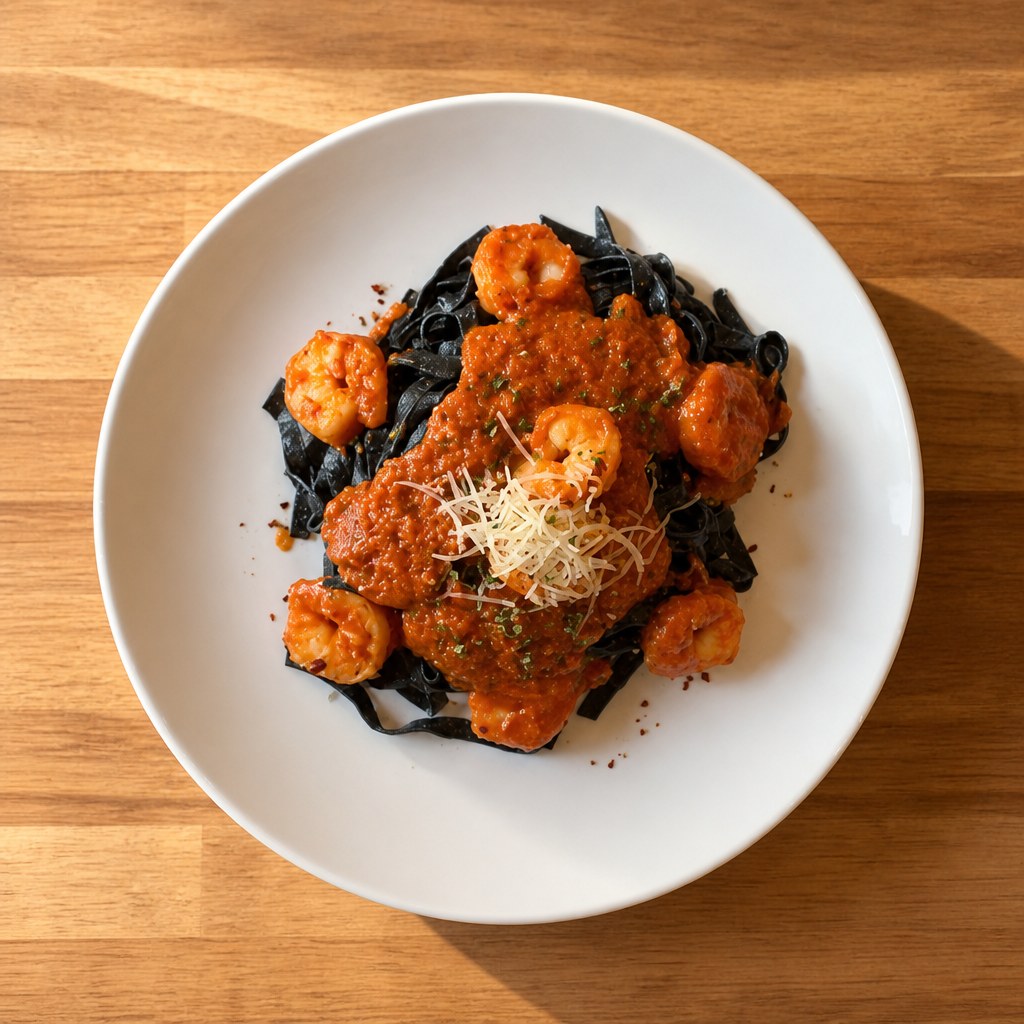
Best rigatoni with brisket ragu in Senoia, GA
Served at Revolution, on the pasta menu.
Where this dish comes from
Rigatoni — from the Italian "rigato" (ridged) — is a pasta shape that originated in Rome and central Italy, where robust meat sauces demanded a pasta with enough structural integrity to hold up. The ridged exterior and wide hollow tube made it a natural vehicle for thick ragù, baked pasta applications, and creamy cheese sauces. While Bolognese is traditionally paired with egg-based tagliatelle in its home region, rigatoni Bolognese became a staple of Roman and southern Italian trattorias where the sauce traveled and adapted to local pasta traditions.
Make rigatoni with brisket ragu at home
We would rather you came in — but if you want to cook it, here is how it is actually made.
For the Bolognese
- 600g soffritto (cooked carrot, celery, onion — see below)
- 200g pancetta slab, cut into small dice
- 1,500g (3.3 lbs) 80/20 ground beef
- 700g (1.5 lbs) ground pork
- 700g (1.5 lbs) ground veal
- 350ml dry red wine
- 350ml whole milk
- 120g tomato paste
- 800g San Marzano DOP whole tomatoes, hand-crushed
- 28g kosher salt
- 4g freshly ground black pepper
- Render pancetta in a wide, heavy-bottomed pot over medium heat until the fat is fully released and the pieces are lightly golden, about 8 minutes. Do not drain.
- Raise heat to medium-high. Add all three ground meats in one layer. Do not stir for the first 3–4 minutes — let the bottom crust. Break apart and continue cooking until all moisture has evaporated and the meat is well browned, 12–15 minutes total. Gray, steamed meat makes a flat sauce.
- Add soffritto. Stir to combine. Cook 3 minutes.
- Add tomato paste. Push it around the bottom of the pot and let it caramelize for 2 minutes — it should darken slightly and smell almost sweet.
- Pour in red wine. Scrape up any fond. Reduce until the wine is almost completely absorbed, 4–5 minutes.
- Add hand-crushed San Marzano tomatoes. Stir well. Add salt and pepper.
- Reduce heat to the lowest possible simmer — just an occasional bubble. Cook uncovered for 3.5 to 4 hours, stirring every 30 minutes.
- In the last 30 minutes, stir in the whole milk. The sauce will lighten slightly in color and take on a silky, rounded texture. Don't skip this step.
- Taste and adjust salt. The finished sauce should be thick, meaty, and barely saucy — it coats the back of a spoon but is not wet.
For the Soffritto
- 250g yellow onion, small dice
- 175g carrot, small dice
- 175g celery, small dice
- 60ml extra virgin olive oil
- 4g kosher salt
- Heat olive oil in a wide pan over medium-low heat.
- Add onion first. Cook 5 minutes until softened and translucent — no browning.
- Add carrot and celery. Season with salt. Cook another 10–12 minutes, stirring occasionally, until everything is completely soft and melded together. The soffritto should look almost jammy.
- Remove from heat. Use immediately or refrigerate up to 5 days.
- Note: Soffritto is the flavor foundation of Bolognese. Don't rush it. Any raw edge on the vegetables will carry through the entire sauce.
For the Fresh Pasta Dough
- 300g 00 flour, plus more for dusting
- 100g semolina flour
- 4 large egg yolks
- 2 whole large eggs
- 1 tsp extra virgin olive oil
- Pinch of kosher salt
- Combine flours on a clean work surface. Make a well in the center.
- Add egg yolks, whole eggs, olive oil, and salt into the well. Using a fork, gradually beat the eggs while pulling flour in from the edges.
- When the dough comes together enough to knead, work it by hand for 8–10 minutes until smooth, elastic, and slightly tacky — not sticky. It should spring back slowly when pressed.
- Wrap tightly in plastic and rest at room temperature for 30 minutes. The rest relaxes the gluten and makes rolling possible.
- Divide dough into 4 portions. Roll through a pasta machine starting at the widest setting. Fold and repeat 3–4 times, then work progressively thinner, stopping at setting 5 or 6.
- For rigatoni: use a rigatoni die attachment, or cut to shape. Dust well with semolina to prevent sticking.
- Use immediately or dry on a rack for up to 2 hours. Do not refrigerate fresh-rolled pasta — it gets gummy.
For the Basil Oil
- 60g fresh basil leaves, picked (about 2 large bunches)
- 240ml extra virgin olive oil, Italian imported
- 2g kosher salt
- Bring a small pot of water to a rolling boil. Prepare an ice bath.
- Blanch basil leaves for exactly 15 seconds. Transfer immediately to ice bath. This sets the chlorophyll and keeps the oil vibrant green — skip this and you get brown oil within an hour.
- Squeeze leaves completely dry in a clean towel. Every drop of water matters. Water makes the oil turn.
- Combine dried basil and olive oil in a blender. Blend on high for 90 seconds until completely smooth and bright green.
- Season with salt. Strain through a fine mesh strainer — do not press. Pressing forces through bitter plant solids. Let it drip through on its own.
- Transfer to a squeeze bottle. Keeps refrigerated up to 5 days. Shake before use.
To Assemble
- Fresh rigatoni (from above)
- Bolognese (from above), warmed
- Parmigiano-Reggiano DOP, for shaving
- Basil oil (from above)
- Kosher salt, for pasta water
- Bring a large pot of water to a rolling boil. Salt it aggressively — it should taste like the sea.
- Warm Bolognese gently in a wide sauté pan over medium heat. Add a splash of water to loosen if needed.
- Cook fresh rigatoni 2–3 minutes until just shy of al dente.
- Using tongs, transfer rigatoni directly into the pan with Bolognese. Toss over medium-high heat for 45–60 seconds, letting the pasta finish in the sauce. The starch binds everything together.
- Plate in warmed bowls. Twist the pasta slightly as you plate — it holds the sauce better and looks better.
- Use a vegetable peeler to shave 3–4 large curls of Parmigiano-Reggiano across the top.
- Finish with a few drops of basil oil around the rim. Serve immediately.
Cheffy’s note
Rigatoni and Bolognese is a southern Italian interpretation of a northern dish, and it works. The tube traps the meat and the ridges grip the sauce. For home cooking, the real advantage of rigatoni over long pasta is that it's forgiving — you can toss it in the pan without the theatrics of twirling. The broiled Parm crust at the end is optional but worth doing: three minutes under a hot broiler turns a good pasta into a great one.
More pasta
Find us
189 Senoia Oaks Way, Senoia, GA, 30276, Senoia, GA
- Tuesday11:00 AM–9:00 PM
- Wednesday11:00 AM–9:00 PM
- Thursday11:00 AM–9:00 PM
- Friday11:00 AM–9:00 PM
- Saturday11:00 AM–9:00 PM
- Sunday11:00 AM–8:00 PM